

The US Department of Commerce has issued an interim rule requiring four Southeast Asian nations and Brazil to apply for licenses when importing high-end AI chips. This move aims to plug loopholes in renting out cloud computing capacity to Chinese enterprises following a scandal involving former Nvidia CEO Jensen Huang.
President Donald Trump's administration has officially rolled out new measures to tighten control over the semiconductor supply chain, as US AI chip export controls target data centers in Southeast Asia to prevent Chinese companies from accessing remote computing power1,2. This interim rule was announced early in the week, just ahead of a meeting between Mr. Trump and Chinese President Xi Jinping1,2.
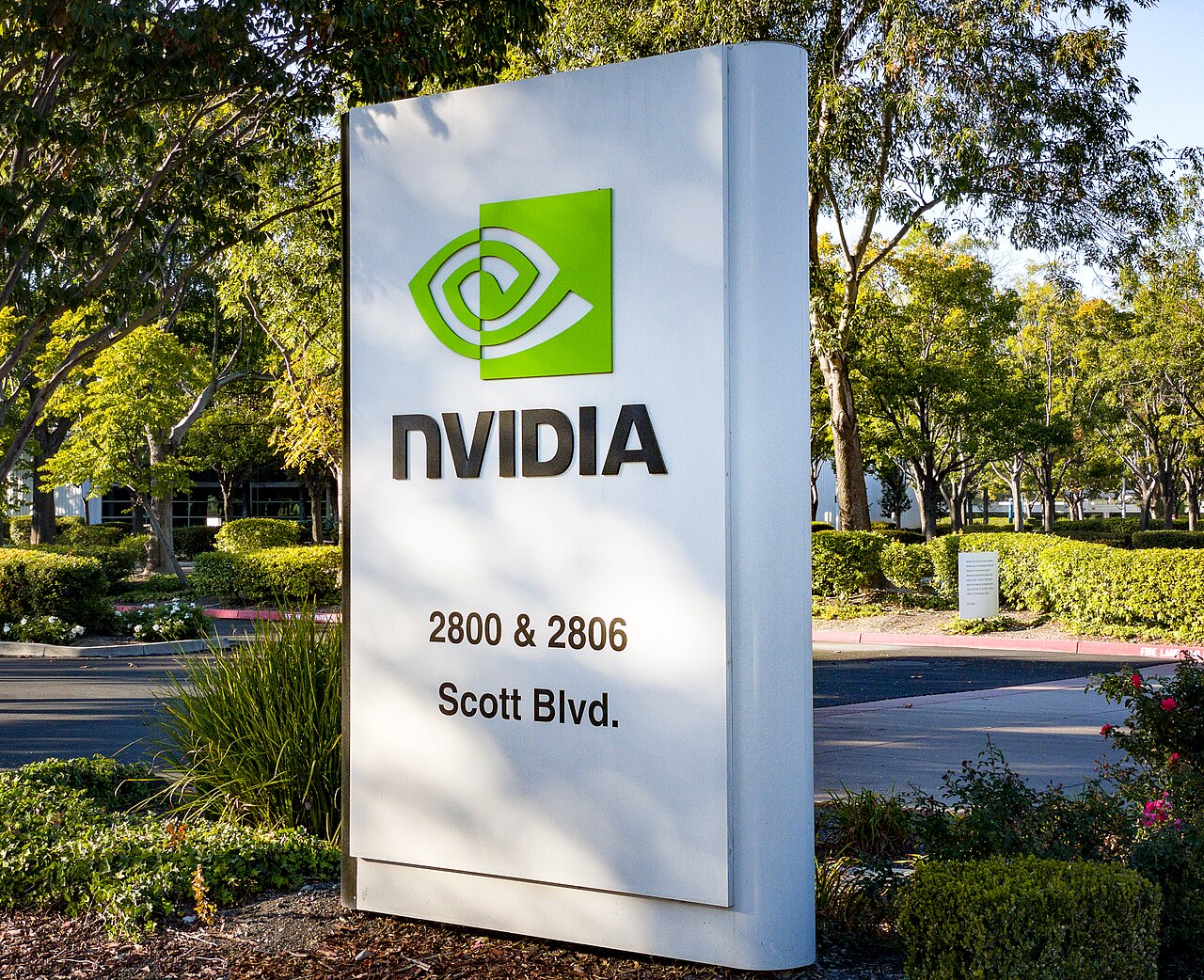
Photo: Nvidia sign – Will Buckner, CC BY 2.0, via Wikimedia Commons.
New regulations target cloud computing infrastructure
Under the interim rule issued by the Bureau of Industry and Security (BIS) of the US Department of Commerce, export, reexport, or transfer orders of advanced AI microprocessors to Singapore, Malaysia, Thailand, Indonesia, and Brazil must all submit case-by-case license applications1,5. The agency assessed that these five countries pose a risk of diverting high-tech chips to more heavily controlled markets than usual1,5.
Photo: Duga-1 radar data center inside empty server racks 2018 – Joël van der Loo, CC BY-SA 4.0, via Wikimedia Commons.
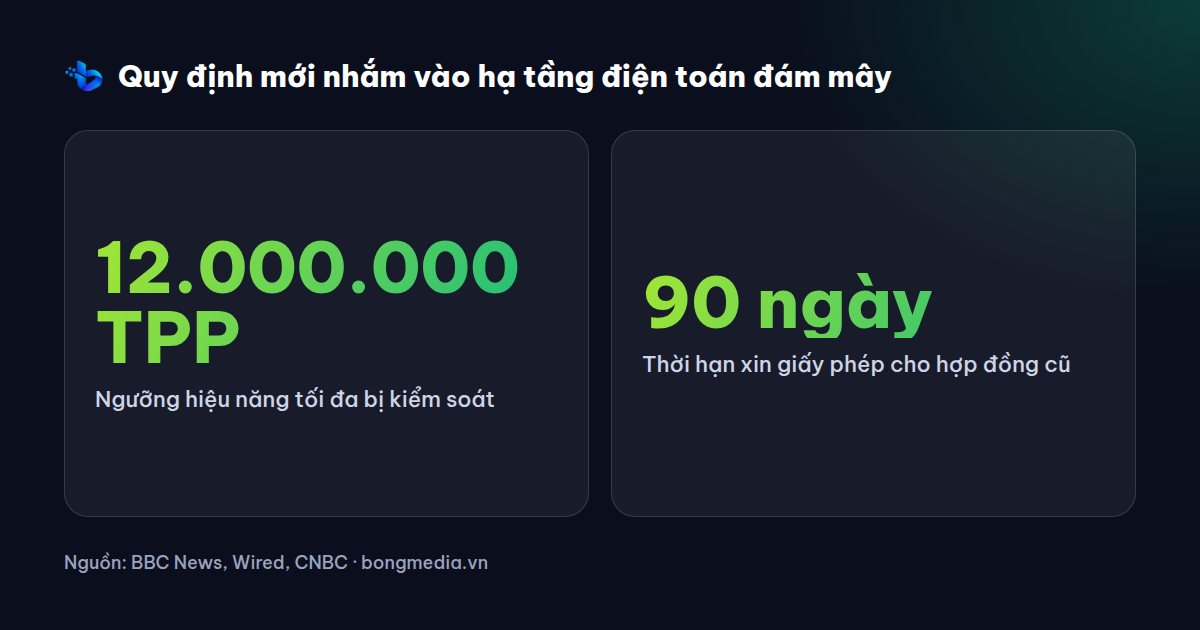
The new technical measure sets an end-use control threshold at 12,000,000 TPP (Total Processing Performance), equivalent to the computing power of roughly 750 Nvidia H100 or H200 graphics processing units5. Any data center providing capacity exceeding this threshold to Group D:5 organizations (including China, Russia, Iran, North Korea) or the Macau territory is prohibited from receiving US hardware5. For ongoing contracts, operating entities have 90 days from the effective date of the regulation to apply for a license5. The BIS exempts this requirement for commercial recommendation systems used on social networks or e-commerce platforms, but strictly applies it to text, audio, or image generative models5.
Turmoil at Nvidia and the Megaspeed loophole
Sanctions were accelerated following an incident at Nvidia, when former CEO Jensen Huang admitted to a romantic relationship with Alice Huang—a former executive at Megaspeed in Singapore, who was suspected by US authorities of intelligence activities for China—leading to Mr. Huang's resignation1,2. Treasury Secretary Scott Bessent requested a comprehensive audit of Nvidia's leadership and questioned the corporation's compliance with export laws3. Former CEO Jensen Huang is scheduled to testify before the US Senate Banking Committee on December 3, 20263.
Photo: B-ad-crosssectionbcb – Fraunhofer ENAS, D. Neumann, CC BY-SA 3.0 de, via Wikimedia Commons.
According to US media records, Chinese server giant Inspur utilized its California-based subsidiary Aivres to legally purchase high-end Nvidia AI chips, including the H200 series, and forward them to Megaspeed2. This entity subsequently established server systems in Malaysia and Indonesia to lease out model training capacity to Chinese tech companies1,2. Research by the Institute for Progress estimates that about 30% of China's advanced AI computing capacity in 2027 will come from outsourcing or routing through indirect channels1.
Under regulatory pressure, Nvidia proactively sent advisory notices to customers regarding the Remote Access Security Act (RASA) awaiting approval by the US Senate3. The chipmaker also announced it would refuse sales to any data center allocating over 50% of its GPU count to Chinese customers3.
Reactions of parties and impacts on Vietnam
Reacting to Washington's move, China's Ministry of Foreign Affairs criticized the new regulation as economic bullying and affirmed it would take measures to protect its legitimate rights1. Singaporean representatives stated they are in discussions with US officials to clarify the rule and seek mechanisms to maintain reliable access for domestic businesses1. Meanwhile, Brazil's Ministry of Development, Industry, Commerce and Services confirmed it is closely monitoring developments1. Expert Naoise McDonagh from Edith Cowan University noted that markets absorbing heavy Chinese capital inflows like Malaysia and Thailand will bear the greatest adjustment pressure1.
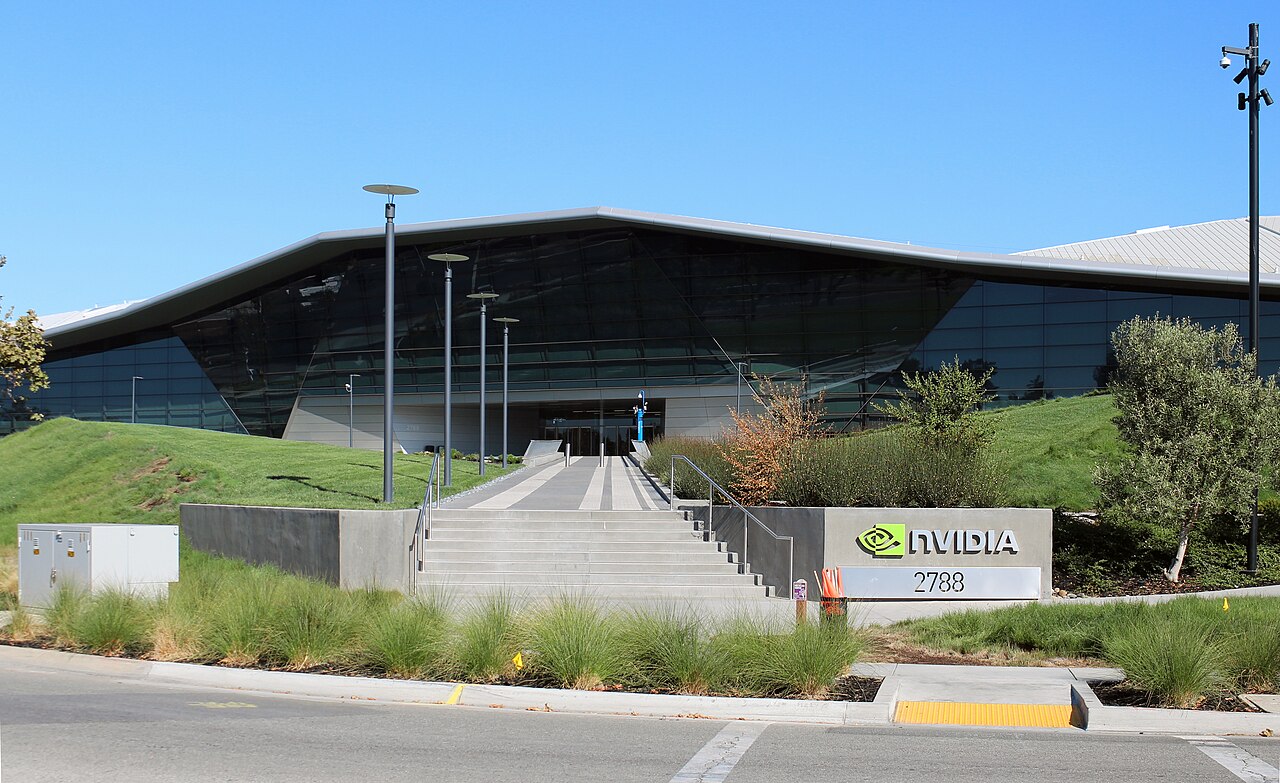
Photo: NVIDIA Headquarters – Coolcaesar, CC BY-SA 4.0, via Wikimedia Commons.
Vietnam is currently not on the list of five countries subjected to widespread licensing mechanisms by the BIS in this round1,5. Concurrently with regional supply chain fluctuations, on November 17, 2026, in Shenzhen, Vietnamese research units and enterprises signed 16 scientific and technological cooperation documents with Chinese partners4. Notably, Ho Chi Minh City University of Technology (Vietnam National University HCMC) agreed with Huawei Vietnam to establish an AI computing infrastructure and next-generation communication network laboratory4. Minister of Science and Technology Vu Hai Quan emphasized that Vietnam takes innovation and digital transformation as development drivers, viewing the Greater Bay Area's high-tech capability as an important complementary factor for domestic growth model restructuring needs4.
Vizy's take
According to Vizy, the US Department of Commerce shifting its control focus from physical hardware exports to cloud computing boundaries indicates that previous embargo measures are revealing major loopholes. The 12 million TPP cap combined with capital flow monitoring in Southeast Asia will likely force regional data center operators to reshape their customer structures to avoid losing access to modern component supplies from the US.
For Vietnam, Vizy believes that while it does not yet face the same special inspection mechanisms as its neighbors, domestic research organizations and digital infrastructure enterprises must exercise extreme caution in international cooperation agreements. As US-China tech tensions spread to joint laboratory and AI infrastructure models, maintaining transparency regarding the end-use purpose of server clusters will be a decisive factor in ensuring high-tech supply chains remain uninterrupted.
Sources
- BBC News – How new US chip restrictions on South East Asia will hit China (Tue, 17 No)
- Wired – The Nvidia Scandal Could Upend Chip Sales to China. Trump Wants to Keep Them Going (2026-11-17)
- CNBC – Nvidia warns chip buyers of legal risks tied to China AI access, sources tell CNBC (2026-11-17)
- VnExpress – Việt Nam nghiên cứu chung, hợp tác khoa học công nghệ với Trung Quốc (2026-11-17)
- Tinh tế – Mỹ chặn công ty Trung Quốc thuê chip AI từ xa, 4 nước Đông Nam Á phải xin phép nhập chip AI (Tue, 17 No)
Compiled and analysed by Vizy from the sources above and reviewed by a Bống Media editor before publication. "Vizy's take" is the author's own opinion. For information only, not investment advice.
FAQ
Which countries are targeted by the US for tighter AI chip export licensing in this batch?
The new rule applies case-by-case licensing procedures to Indonesia, Malaysia, Singapore, Thailand, and Brazil.
What technical standard does the US use to control cloud-based AI chip leasing?
The US Department of Commerce set a Total Processing Performance (TPP) threshold of 12,000,000, equivalent to the capacity of about 750 Nvidia H100 or H200 graphics processing units.
How much time do existing businesses have to comply with the new rules?
Data centers already serving Group D:5 customers before the regulation was announced have 90 days from the effective date to submit license applications.